Best Youth Basketball Club Teams in San Diego for Skill Development
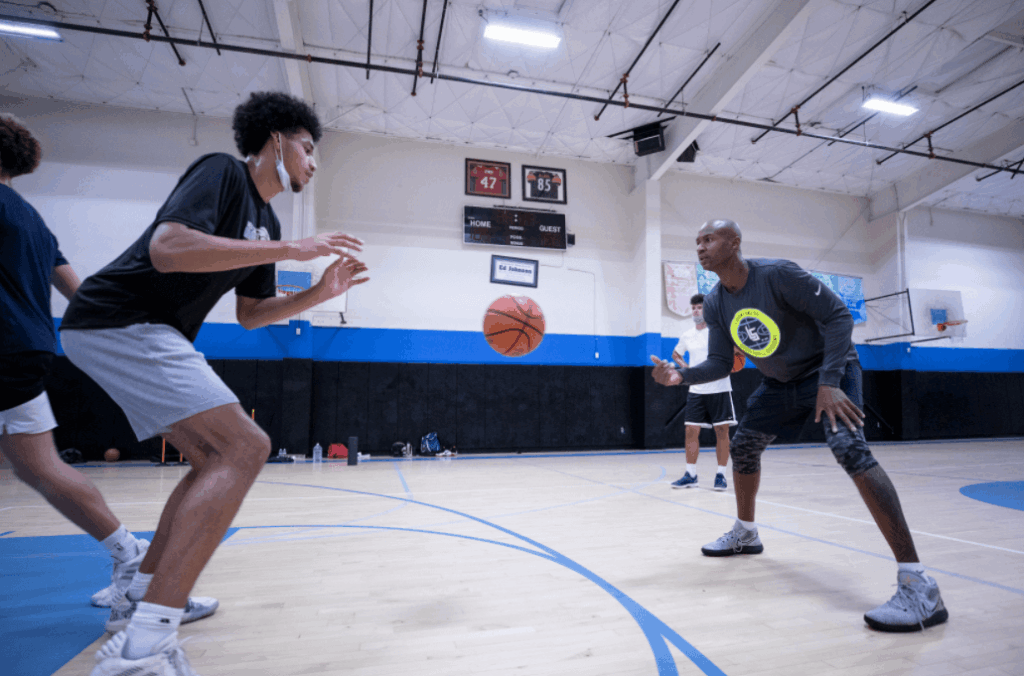
San Diego has never lacked for youth basketball options. The challenge for families is not finding a team, it is finding the right environment. That matters more than the logo on the jersey. A club can have a packed gym, a polished social feed, and a full tournament calendar, yet still do very little for a player who needs technical work, confidence, structure, and honest coaching.
When parents ask about the best Basketball Club Teams San Diego has to offer for skill development, I usually start in the same place. Forget hype for a minute. Focus on what actually improves a young player over a season. Does the staff teach footwork in detail. Do players get real repetitions, not just scrimmage time. Is there a plan for guards, wings, and post players, or does every workout look the same. Are mistakes coached, or just criticized. Those answers tell you far more than a tournament banner.
The strongest clubs in San Diego tend to share a few traits. They train consistently, they put skill work ahead of shortcuts, and they understand that development is different at age 10 than it is at age 16. Some clubs lean harder into exposure and high level competition. Others are better at building a foundation for younger players who still need ball control, balance, passing reads, and defensive habits. The best fit depends on the athlete in front of you.
What follows is not a rigid ranking, because youth basketball does not work that way. Rosters change. Coaches move. Age groups within the same club can vary. https://pastelink.net/7lqt0tiy Still, there are several San Diego area programs that come up repeatedly when people talk about real development, not just weekend travel.
What “skill development” should actually mean
Skill development gets thrown around so casually that it can lose meaning. In a good club setting, it is not just doing cone drills for fifteen minutes before live play. Real development shows up in details.
A developing guard should handle pressure better in February than in September. A young wing should learn how to catch on balance, attack a closeout, make the simple extra pass, and defend without reaching. A forward should improve footwork around the basket, screening angles, and weak side positioning. Across every position, shooting mechanics should become more repeatable, decision making should get quicker, and conditioning should support the pace a coach wants to play.
That is why the best clubs are not always the ones with the biggest win totals at younger ages. Sometimes the team that wins at 11U does it by leaning on one physically advanced kid and letting everyone else stand around. That approach often looks great on a Sunday afternoon and terrible two years later. The better developmental programs spread reps, teach reads, and ask all five players to think.
The San Diego clubs that deserve a serious look
Several youth basketball organizations in the area have built reputations for player growth. They are not identical, and that is a good thing. Families should want differences in training style, culture, travel load, and expectations.
Gamepoint Basketball
Gamepoint is one of the first names that comes up in San Diego youth hoops for a reason. The program has long been visible in the region, and families often point to its structured training environment as a major strength. The staff emphasis has typically leaned toward fundamentals, repetition, and skill sessions that are more deliberate than chaotic.
For younger players, that matters. At the elementary and middle school levels, many kids still need posture correction, better layup footwork, stronger weak hand development, and a clearer understanding of spacing. Clubs that slow down enough to teach those details tend to serve players well over time. Gamepoint has often appealed to families who want exactly that kind of measured developmental setting.
The trade-off is straightforward. Players who thrive in a high-energy, highly competitive scramble may want to make sure the team placement and practice intensity match their personality. Not every athlete develops best under the same pace. A quieter gym with technical instruction can be excellent for one child and too restrained for another. That is why watching a practice is more useful than reading a mission statement.
619 Basketball
619 Basketball has earned attention across San Diego for blending training with competitive team play. For families looking for a club that feels plugged into the local basketball scene, it is usually part of the conversation. Programs in this lane often appeal to players who want both accountability in workouts and enough live competition to test what they are learning.
What I like about clubs built this way is the practical feedback loop. A player works on change of pace, getting downhill, or defensive stance during the week, then has to use it under pressure on the weekend. That is where development becomes real. It is one thing to hit pull ups in lines. It is another thing to reject a screen, keep your dribble alive, and make the right pass with help defenders rotating.
For a player who is serious about improving, this kind of environment can be productive. The key question is role clarity. Families should ask how much individual teaching happens once the season is moving fast. Some clubs begin with strong developmental intentions, then naturally drift toward game preparation as tournament schedules pile up. That is not inherently bad, but it changes the value proposition.
SD Soldiers
The Soldiers name has carried weight in Southern California basketball circles for years, and in San Diego youth basketball that visibility matters. Players often join programs like this because they want stronger competition, tougher practices, and a chance to measure themselves against better athletes.
That can be excellent for development, especially for players who already have a skill base and now need to sharpen decision making against speed and length. A talented middle school guard who dominates weaker local competition may not learn much by scoring 20 easy points. Put that same guard in a gym with aggressive on-ball defenders, quick traps, and transition pressure, and suddenly every weakness gets exposed. That is uncomfortable, but incredibly useful.
The caution is that competitive clubs can vary widely by age group. One roster may have strong teaching and excellent chemistry, while another may feel more like a talent collection. Families considering any prominent club should ask who will coach the team directly, how stable that staff has been, and whether practice time favors instruction or just running games. For advanced players, the Soldiers model can be a meaningful step forward. For beginners, it may or may not be the best first fit.
San Diego Sol
For girls basketball in particular, San Diego Sol has long been a recognizable name in the area. Programs with a clear presence on the girls side are valuable because they often create stronger peer competition, better role modeling, and a more coherent development pipeline.
Skill development in girls basketball follows the same core principles as any good training environment, but club culture can still make a difference. The best girls programs tend to do a strong job of teaching confidence alongside mechanics. Too many young players, especially in the middle school years, become overly cautious. They pick up the ball too early, pass up open jumpers, or hesitate on drives because they are worried about mistakes. In a well-coached setting, players are taught to read the floor and play assertively without forcing the action.
San Diego Sol is often discussed by families who want that blend of team structure and long-term growth. As always, the specific coach and team level matter, but the program belongs on any serious shortlist for girls in the region.
West Coast Select and other regional travel programs
San Diego families also look at broader Southern California travel organizations with teams or training ties in the area. West Coast Select is one example often mentioned in these conversations. The appeal is easy to understand. Regional programs can provide stronger tournament competition and expose players to different coaching voices and playing styles.
For skill development, though, parents should look beneath the travel schedule. A club that plays elite events but practices only lightly is not automatically a better developmental choice than a local program that teaches well three nights a week. Exposure without a skill base helps very few players. There is no shortcut around daily habits.
That said, for high school athletes who already have sound fundamentals, a regional club can be the right move. Once a player truly knows how to shoot, defend, and process the game, the next developmental step is often playing against deeper talent pools. That environment can speed up reads, punish lazy habits, and reveal exactly what needs work before the school season.
The right team depends on the stage of the player
One mistake I see often is families chasing the same kind of club at every age. That usually backfires.
A fourth grader rarely needs the same basketball environment as a sophomore in high school. Younger players need touches, patience, and broad instruction. They should dribble with both hands, finish from awkward angles, pivot without traveling, learn help defense, and start understanding spacing. If a club skips those layers and jumps straight to set plays and weekend volume, the player may look organized but stay underdeveloped.
By middle school, the picture changes. This is where better clubs separate themselves. Players should begin connecting skills together. Ball handling has to lead somewhere. Shooting should happen on the move, off catches, and out of game-like reads. Defensive work should include closeouts, shell concepts, communication, and rebounding position. Practices that still feel overly basic at this stage can leave strong athletes stagnant.
For high school players, developmental value often comes from competition level, role challenge, and specialized feedback. A varsity level wing may need to tighten one-dribble pull ups, become more reliable as a weak side defender, or improve pace as a secondary ball handler. A good club coach at this level sees those specifics and teaches accordingly. A weaker one just rolls out the ball and lets the most aggressive players dominate possessions.
What families should look for before joining
If you can watch one training session before committing, do it. Ten minutes in the gym usually tells the truth.
Here are the signs I would pay closest attention to:
- Coaches correct details, not just effort.
- Players spend meaningful time on skill work before live play.
- Drills have game context, not empty motion.
- The gym energy is demanding but not chaotic.
- Athletes of different levels still receive coaching.
Those five markers reveal a lot. If the practice is mostly scrimmaging, if weaker players stand around, or if coaching consists of generic phrases like “play harder” and “be aggressive,” development will likely be limited. On the other hand, if a coach is teaching foot placement on a jump stop, explaining why a pass angle matters, and stopping play to fix defensive positioning, that is a strong sign.
One parent I spoke with a few years ago described switching clubs after noticing that her son’s team won often but never taught. She said the practices were loud, fast, and impressive to watch from the bleachers, yet after six months he still struggled with his off hand and looked unsure when pressured. The next program won fewer games early, but spent time on pace, pivots, and reads. By spring, he looked like a different player. That is youth basketball in a nutshell. Short-term excitement and long-term growth are not always the same thing.
The hidden factors that matter more than marketing
Club basketball is full of branding. Uniform packages, social posts, tournament photos, and recruiting language can make every program sound elite. What really changes players is less glamorous.
Gym time matters. So does coach consistency. So does roster size. A team carrying too many players often leaves development to chance, especially if only eight or nine get meaningful game reps. Communication matters too. Families should know whether the club expects heavy travel, private training add-ons, or year-round participation.
Cost is another practical consideration. San Diego club basketball can get expensive once fees, uniforms, travel, and extra training are added together. High price does not guarantee high quality. Some smaller programs do excellent developmental work because their coaches are teachers first and marketers second. Others charge premium rates for a competition calendar that looks impressive but offers minimal personal attention.
This is where honest self-assessment helps. If your child needs confidence and foundational reps, a less flashy club with stronger teaching may be the better investment. If your child is already advanced and needs tougher competition plus exposure to different systems, a larger regional platform may make more sense.
A word on coaches, because they matter more than the club name
Families often shop for clubs when they should really be shopping for coaches. Within the same organization, one team can be outstanding and another merely average. That is not unusual. Youth sports are local and human. The daily experience comes from the coach your child sees in the gym, not from the brand across the chest.
A strong youth basketball coach does three things well. First, they teach with clarity. Players know what is expected and why. Second, they build accountability without humiliation. Kids get corrected, but not diminished. Third, they understand progression. They do not ask for varsity-level reads from a player who still cannot stop on balance.
If you find a coach who can do that consistently, hold onto that relationship. Club logos change. Good teaching lasts.
So, which San Diego club teams stand out most?
If the question is which Basketball Club Teams San Diego families should put on their initial list for skill development, the answer usually includes programs like Gamepoint Basketball, 619 Basketball, SD Soldiers, San Diego Sol, and selected regional travel groups such as West Coast Select, depending on age and goals. Each can make sense in the right situation. None is automatically perfect for every player.
The real separator is fit. A younger athlete may flourish in a club that prioritizes repetition and structure. A more advanced player may need a faster, tougher environment that exposes weaknesses. A girls player may benefit from a strong, established girls program where role development and confidence are coached well. A high school athlete with college ambitions may need regional competition, but only if the skill base is already there.
That is the judgment call parents have to make. Not which team sounds biggest, but which environment will make the player measurably better by the end of the season.
If you can, watch practice, ask direct questions, and pay attention to teaching quality over reputation. In San Diego, there are enough solid options that families do not need to settle for a club that talks about development without actually delivering it. The best team is the one that turns weaknesses into strengths, gives the player a clear role, and keeps growth at the center of the experience. That is what real skill development looks like, and it is still the standard that matters most.
Lamont Smith Basketball Academy
888 Clairemont Mesa Blvd Suite T-2, San Diego, CA 92123
(619) 639-8778
FAQ About Basketball Club Teams San Diego
How can a player join an LSBA club team?
Players are evaluated during practices so the coaching staff can recommend an appropriate team and development level. Families should contact the academy to confirm current openings and evaluation details.
Are club teams available for newer basketball players?
Yes. LSBA describes multiple levels, including a developmental option for newer players as well as more competitive teams for athletes with prior club experience.
What do LSBA club team practices emphasize?
Practices emphasize basketball fundamentals, team defense, structure, communication, and player development. The specific focus may vary according to the team and experience level.
Do all LSBA teams travel?
Travel expectations vary by level. Some teams focus on local competition, while advanced teams may participate in tournaments elsewhere in Southern California or beyond. Families should confirm the current schedule before enrolling.